Matlachinada de Coahuila

Tlaxcalteca Dance, Apache Dance and Palm Dance

Dir. Brenda Vea Zambrano  

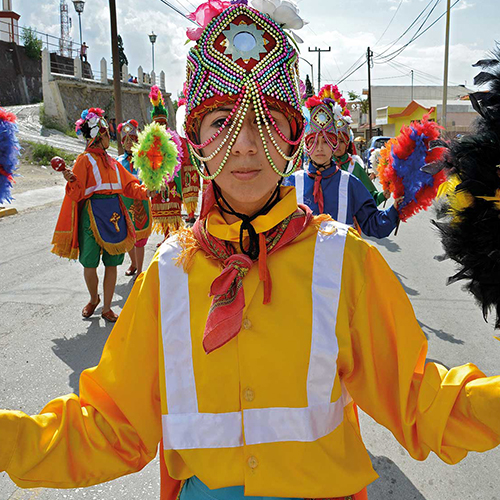
Guanajuato's alleys will be the stage for this mestiza dance that gets its name from “matachín” or “matlachín”, nahuátl words that mean “the one who dances or turns around like malacates”. As a result of evangelizations this dance arrived to the north of Mexico around 1591 when the first tlaxcaltecas arrived in Coahuila. 

It is a prehispanic tradition with warlike characteristics, noticeable in their lineal rows, use of arrow and bow and its two or more captains. It’s completed by the drums, the old dancing mand and the steward. The music is created by the rattles, the energetic steps of dancers, the drums, the violin and sometimes, the accordion. 

A show surrounded by colors and sounds that celebrate our indigenous roots. 

Schedule Mi Cervantino
Matlachinada de Coahuila

Matlachinada de Coahuila

Company | México

Coahuila´s Government throughout Secretaría de Cultura has collaborated with “La Matlachinada Estatal” made in Saltillo were all different kinds of dances from the state reuniting 3,000...

Curious fact:

Coahuila has three types of dances: "Tlaxcalteca", "India" or "Apache" and "de la Pluma", and even though they are not from the state, they have become an important part of Coahuila´s culture.  

Gobierno del estado de Coahuila SIN VEDA

Dance DANCE

Type of audience: General


Programming subject to change

Share

With colorful costumes and plumes, the matlachines filled the streets of Coahuila with rhythm, especially Hidalgo Street where they make the main route along with hundreds of families and tourists that saw the dances within the framework of Festival Internacional de Cultura Saltillo 2019”.

Karla Itzel Ruiz. EL SOL DE ZACATECAS  

“A true delight for the eyes is to see reunited those who use Matlachin costumes with pride and dance to rhythm of the drums as religious offering. For the third year in a row the La Matlachinadais celebrated. From the Ojo de Agua church, it came out a human river of colors and movement, with the purest scent of tradition”.

EL DIARIO DE COAHUILA 

“Dancers guided by the rhythm of the drums that recall the tlacalteca origin of Saltillo, in this exact place, where Alberto del Canto founded the city 42 years ago”.

Néstor González. ZÓCALO